Madiro Implementer AI
From requirement to deployed system, guided by AI.
It turns the Jira and GitHub tickets you already track into grounded, review-ready changes — reusing the implementation knowledge your team already has, and capturing what every project teaches. All inside your own AI client, on your own LLM and key.
How it works
The platform, end to end.
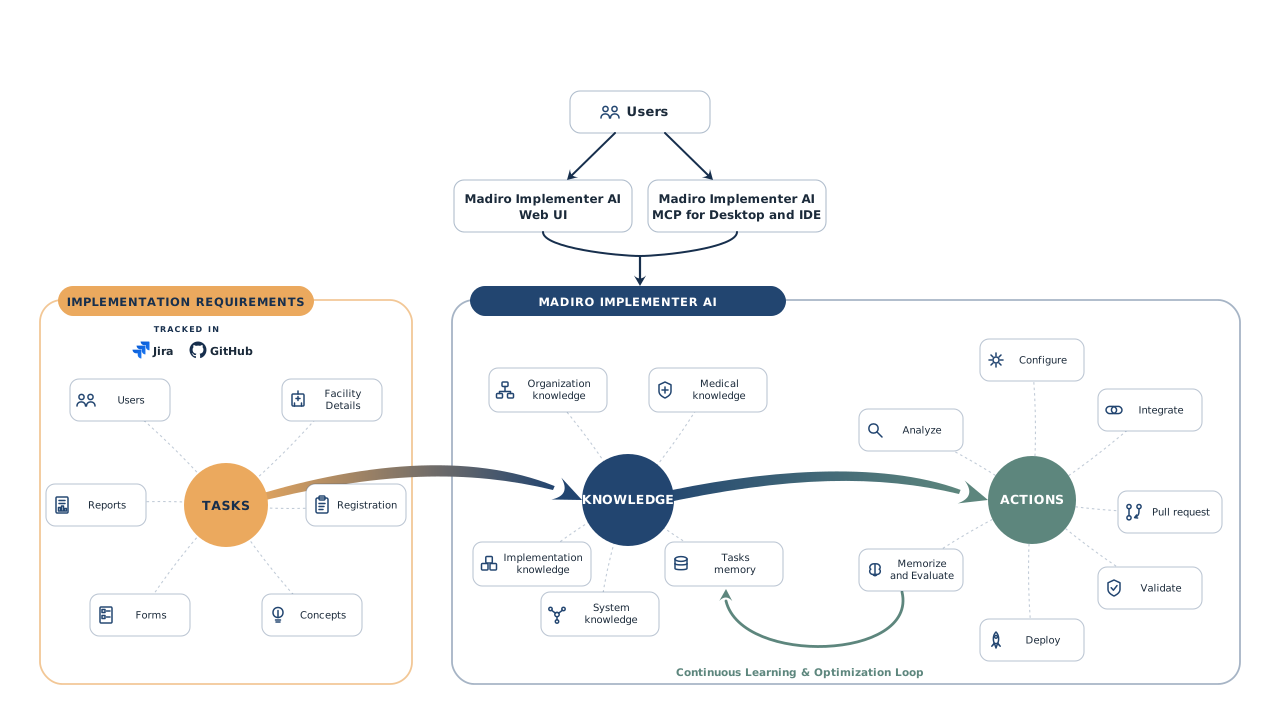
From access through the continuous learning loop.
Already in use at


What it does
Reuse what you know, capture what you learn, and get it done.
More than a knowledge base or an assistant: it puts your knowledge to work, grows it every project, and turns tracked tasks into review-ready changes.


Reuse what you know
It brings your existing organizational, medical, and system knowledge, working from the tasks you already track in Jira and GitHub Issues. No implementation starts from a blank page.
Capture what you learn
Every project adds to a living memory. New decisions, configurations, and lessons are recorded and ready to reuse, so your team and new joiners build on each other instead of starting over.
From task to review-ready change
It grounds a tracked task in your knowledge, opens a real pull request on your repository, and evaluates the outcome. A person always signs off before anything merges.
See it work
Works where your team already works.
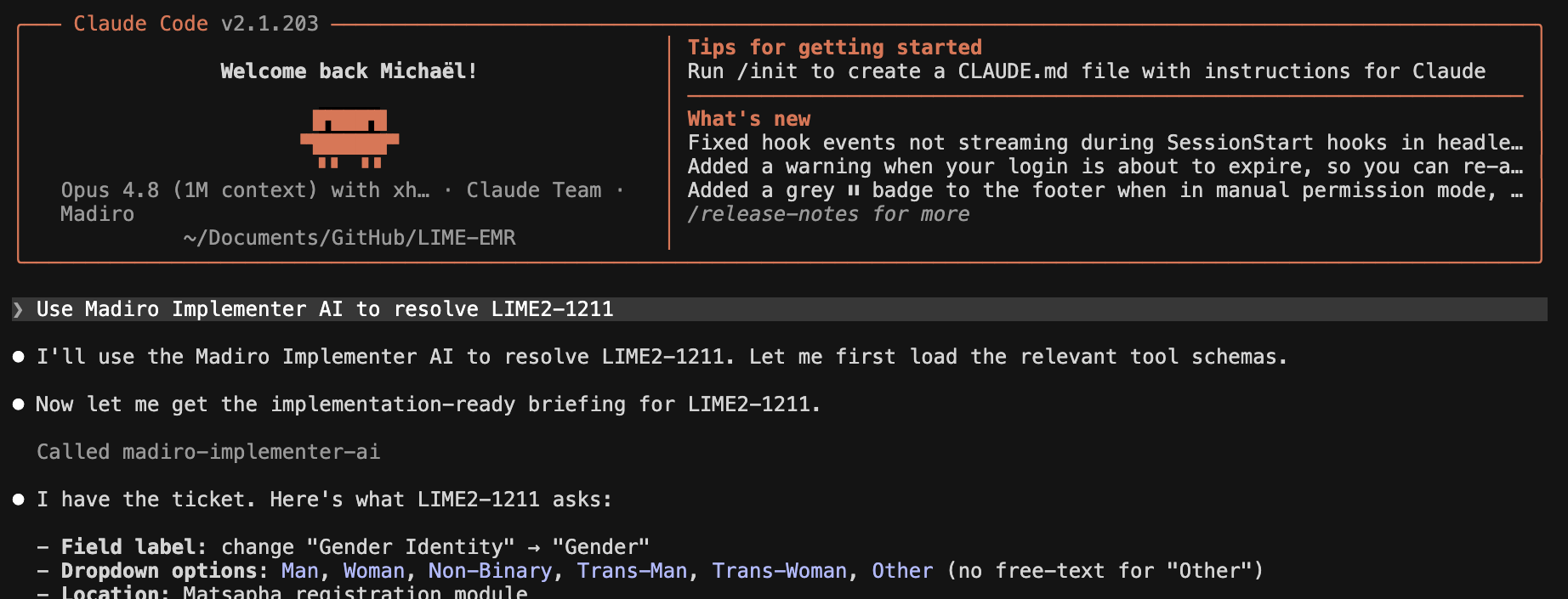
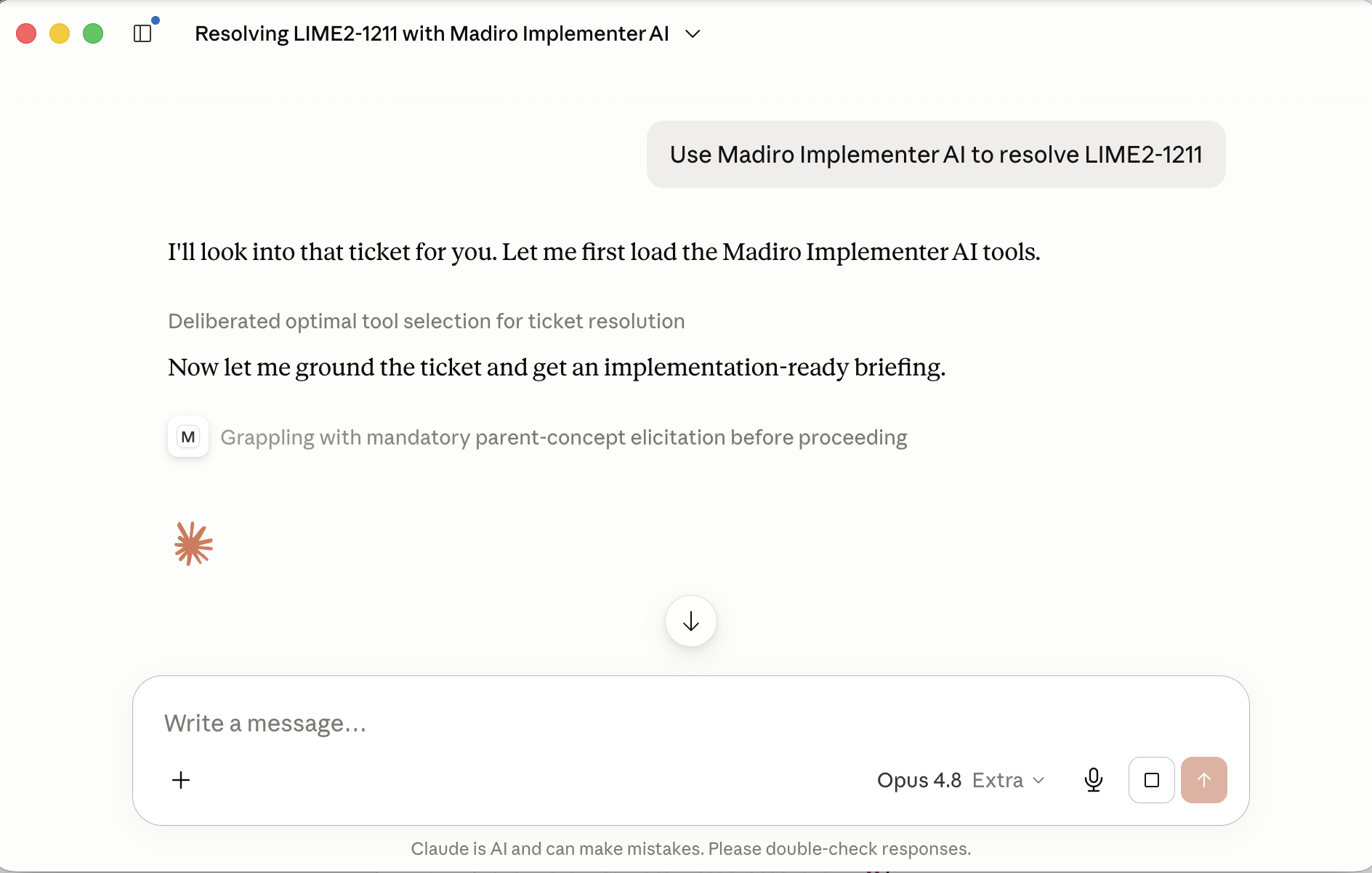
Resolve a ticket from the command line or from Claude Desktop — the same governed MCP, grounded in the knowledge your team is entitled to. It authors a review-ready change and opens a real pull request; a person reviews and merges it — nothing ships on its own.
In your IDE & command line
In Claude Desktop
Quality & evaluation
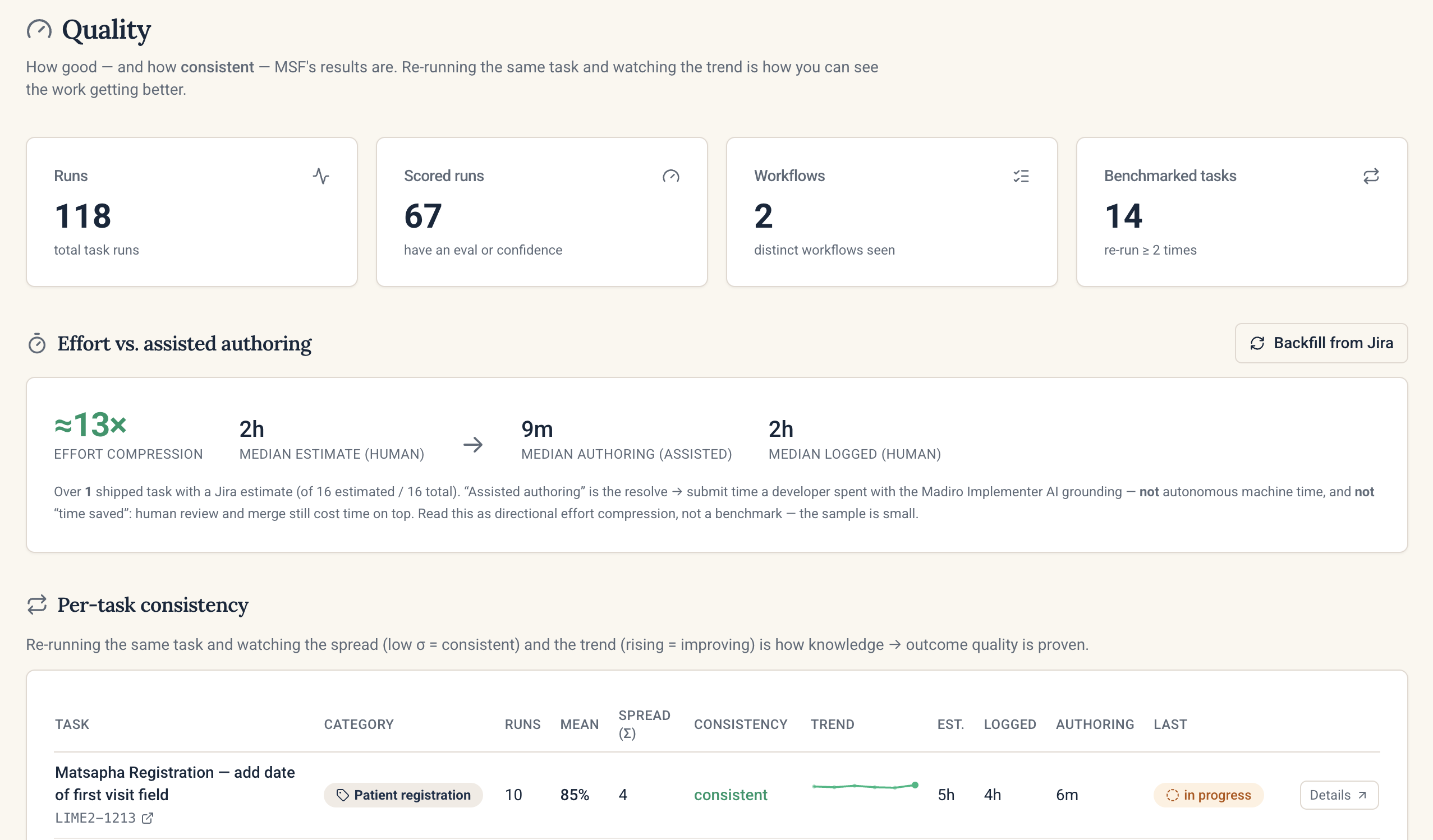
Every run is evaluated.
The platform scores each task for quality and consistency, and compares the time spent against the Jira estimate — so the value is measured, and it holds up as teams re-run tasks and the knowledge base grows.
MSF’s quality dashboard
Why it matters
Keep your knowledge. Keep your independence.
When partners leave, their expertise leaves with them. The platform turns that experience into living memory — personal, organizational, and governmental — so it’s never lost again.
Your stack stays yours. Requirements and code live in your own systems, and a person signs off before anything ships.
Bring your own LLM and key. Your model and data stay yours — you never pay us for inference.
You own what you create. Keep your knowledge private, or share it back to the community. Built on open source and open standards.
Your knowledge, governed
Private by default. Shared on your terms.
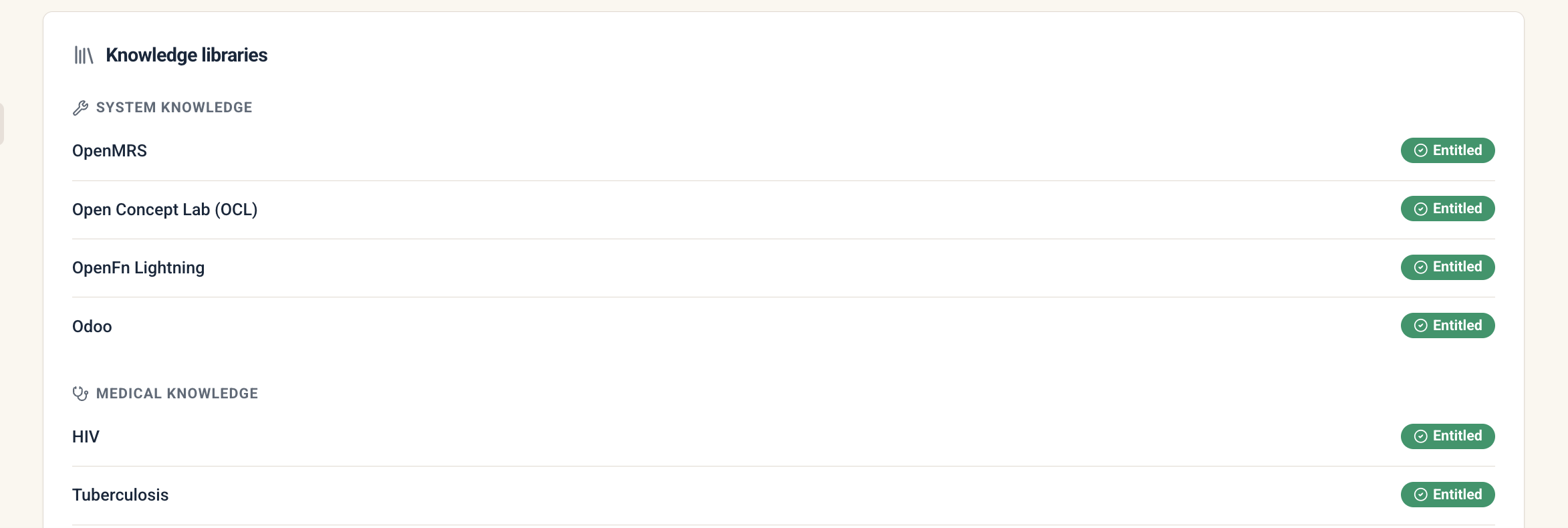
- Every task draws on all three layers at once — private, network, and community.
- Private stays private — isolated to your organization by default.
- You decide what to promote outward — and how far it travels.
Your forms, mappings & configs — kept private to your organization, shared only when you decide.
Open & extensible
Agnostic by design. It grows with your stack.
Not tied to any one system. It connects to what you already run — and extends to new systems, medical programs, and shared knowledge libraries. Built on open standards and digital public goods, so what you build can flow back to the community.

OpenMRS
Open medical record system
Open Concept Lab
Shared clinical concepts
OpenFn
Data integration workflows
Superset
Analytics and dashboardsIn the marketplace
Continuous learning
It gets sharper with every deployment.
Each outcome is evaluated and fed back into task memory — so results get sharper and the cost per run keeps falling.
Trust and control
Governance and observability, built in.
Everything the platform does is visible, auditable, and under your control.
Plans
Built for who you are.
From open-source contributors to national programs, there’s a fit — and early adopters help shape it. Every plan runs on your own LLM and key.
Contributor Free
Individuals and open-source communities.
- Web UI and MCP access
- Open community knowledge
- Public contributor page
- No LLM as a judge review
Contractor
Service providers delivering for clients.
- Private knowledge and multi-client workspaces
- Reusable configurations across clients
- Observability and evaluations
Organization
Organizations running systems.
- Organizational memory and governance
- LLM as a judge review
- Deploy, with audit trails
- Onboard new systems and programs
- Priority support
Public Institution
Ministries and national programs.
- Governmental memory
- Sovereign deployment on your infrastructure
- Full governance, audit, and SLAs
Become an early adopter.
Our early access program is open to a limited first cohort of open-source communities, service providers, organizations, and institutions. Early adopters get priority onboarding, direct access to the team, and a real say in what the platform becomes.
If the form does not load, reach us through labs.madiro.org.